Field Notes from an Alien
Or: How I Accidentally Discovered Masking Before Autism
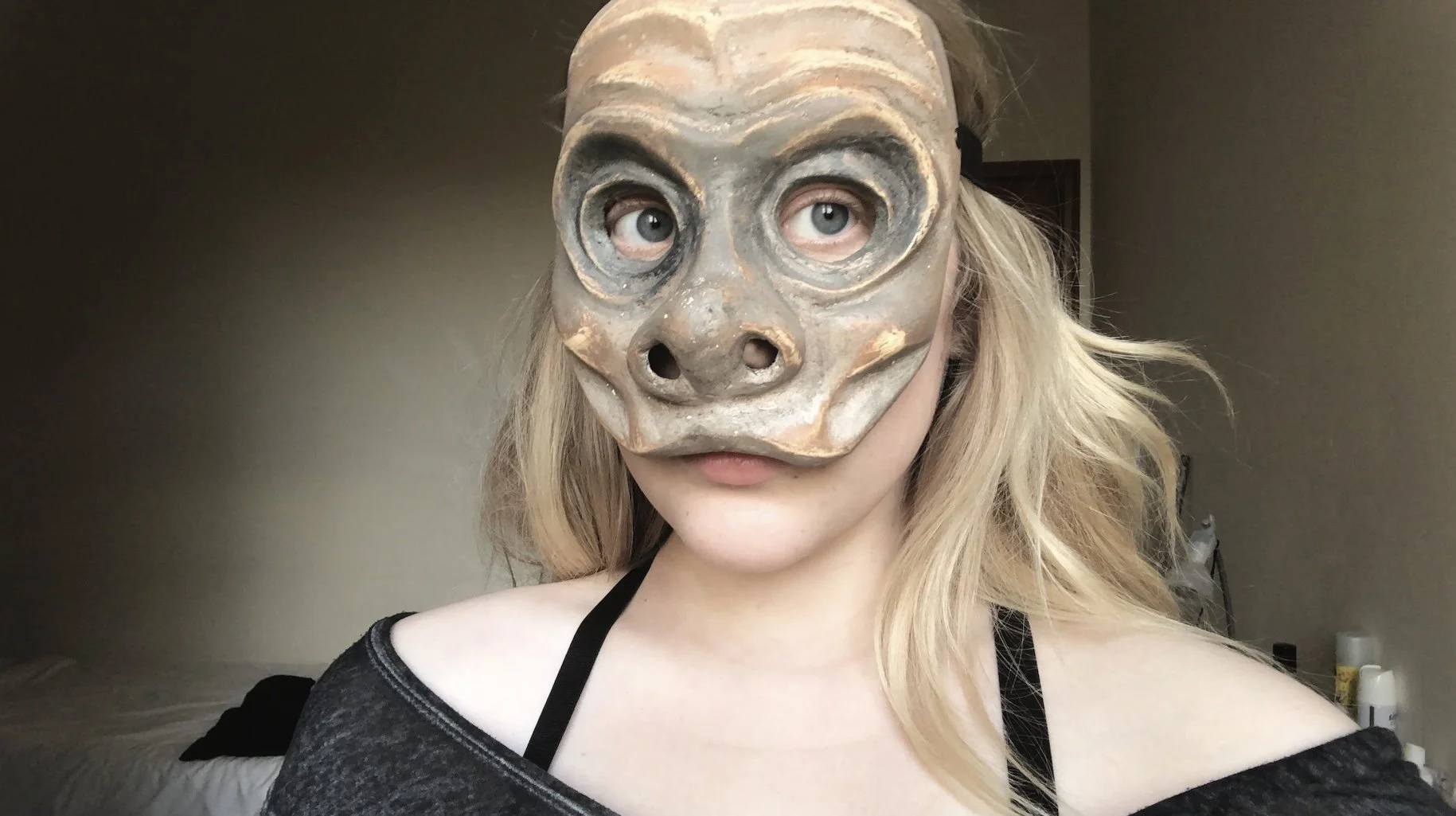
For a lot of my life, I felt like a glitch.
Not malfunctional, exactly (though there were certainly moments). Just...misplaced.
Like somewhere in the grand administrative process of humanity, there had been a clerical error. An alien accidentally got filed under “person,” and now it was far too late to out myself as such.
So I studied.
I watched how people moved through the world. How they talked to each other. How long they held eye contact. When they laughed. When they didn’t. What they seemed to care about. Which rules were overt and which ones everyone somehow knew without discussing.
Then I copied them. And I got pretty good at it. Or at least good enough that nobody pulled me aside and asked to see my planet of origin.
The Human Costume
I got good enough that there were stretches of time when I forgot I was doing it. I’d slip into the role so completely that I believed it too.
Maybe I was normal after all? Maybe I’d cracked the code? Maybe I’d worked hard enough to become the thing I was pretending to be?
But, as I knew well in other capacities, every performance has an intermission.
I’d come home from school, rehearsal, social events, work—whatever it was—and crash. Sometimes for the rest of the day. Sometimes for the rest of the week.
I thought that was the price of existing. Like taxes, laundry, and replying “just circling back” to emails.
The Dance Journal Discovery
The first time I consciously recognized I was operating a charade was during college while writing a weekly journal for a dance class.
They were miserable, those essays. Three pages with no true prompt beyond “muse on your relationship with dance,” which, for body and gender reasons I had yet to fully clock, was a strained one.
But somewhere in the process, once I had given up the teacher’s pet-y pretense of doing the task “right,” I accidentally rambled my way into a realization that felt much bigger than the assignment deserved:
I was performing all the time. Whether on a stage or not. If someone else was around, I was not myself.
At the time, that realization felt significant, but I had no idea where it would eventually lead. I didn’t know it was the first breadcrumb in a trail of diagnoses, explanations, and reflections that would reshape how I understood myself.
I just knew I was tired. And that the effort required to be perceived correctly was costing more than I could afford.
Falling Booty-Backwards Into Self-Understanding
Looking back, there’s something funny about the order of operations here. Most people discover they’re autistic and then learn about masking.
I basically went: “Huh. I appear to be pretending to be a person,” and only years later realized the extent of the problem.
Still, it gave me permission to start living a liiittle differently.
I didn’t suddenly become fearless or authentic or enlightened. I didn’t throw off the shackles of society and frolic through a meadow.
I just started questioning what was actually me.
Did I actually want this? Did I actually care about that? Was I making this choice because it made sense for me, or because it seemed like the kind of choice a normal person would make?
The answers were often unfortunate. And quite difficult to identify (thanks Alexithymia).
A Little Grace for Past Liv
I have a lot of empathy for pre-diagnosis Liv.
It’s easy to look backward and cringe at it. At me. The rigidity. The undeserved certainty. The narrow worldview. The exhausting attempts at femininity. The habit of absorbing pieces of other people’s personalities and wearing them like borrowed flesh. Like a kid desperately assembling a disguise from the clearance rack of humanity.
But in fairness, those were reasonable conclusions to reach with the information I had.
If you spend your entire life feeling fundamentally different and nobody tells you why, you’re going to start building theories. You’re going to create rules. You’re going to search for explanations. You’re going to construct an identity out of whatever materials happen to be available.
That’s not failure. That’s adaptation. I wasn’t doing it wrong. I was surviving. And in many ways, I was surviving remarkably well.
An Ongoing Demolition
The really great part of all this is that once you realize you’re masking, nobody hands you an instruction manual for unmasking.
There isn’t a dramatic movie montage where you throw away all your insecurities and emerge from a chrysalis wearing sensible shoes.
Mostly it looks like intent. Experimentation. Slowing down. Noticing.
Like letting myself stim when I’m happy. Admitting when I was overwhelmed instead of trying to push through it. Wearing clothes that excited me instead of clothes that followed the rules. Discovering that some of my opinions were mine and some were inherited from people I desperately wanted approval from.
Some things fell away quickly. Others are still under review.
Unmasking, for me, hasn’t been about uncovering a hidden “real” personality buried underneath everything else. It has been, tragically, much more tangled.
It’s separating survival strategies from preferences. Keeping what serves me. Letting go of what doesn’t. Learning which parts of me are costume and which are actually my skin. While still like, managing to be a person and make money and function and be an adult and artist and family member and and and and. Glitch.
Final Notes from Planet Liv
Suffice it to say, the research is ongoing.
The great work continues. The experiment lives on.
Some days I still feel like an alien. Some days I do not care.
But I no longer spend my precious energy trying to earn my place here.
And you know what? After all these years, I’ve grown fond of the alien.
Which is convenient because, as I now know, it’s not going anywhere.
Prof. Tyndall
’tism. t’eatre. teachin’.